
The first UK Musicians' Census, which surveyed almost 6,000 musicians, found that average annual income from music was £20,700. Some 43% earned less than £14,000 from music, while more than half needed income from outside the industry to sustain their careers. Nearly half reported financial barriers restricting their progress, including the cost of equipment, transport and training, while a quarter said that simply not knowing anybody in the industry was a barrier. None of that will surprise many working musicians. Music has always involved a degree of financial absurdity. We expect people to spend years learning an instrument, buy expensive equipment, travel around the country, rehearse regularly, record professionally and somehow maintain an online presence that suggests they're doing brilliantly, often while earning very little from any of it. Then we wonder why so many people from poorer backgrounds struggle to establish themselves.
I grew up in a working-class household in Stretford, and I'm conscious that my own route into the music industry involved a mixture of determination, luck, unexpected opportunities and people willing to give me a chance. I certainly didn't start out with a ready-made professional network. I've been fortunate enough to spend much of my career working with musicians I once admired from a distance, but I'm equally aware that plenty of capable people never get those opportunities. Research into the wider creative industries consistently shows how significant class remains. One major study found that only 16% of people working in creative occupations came from working-class backgrounds, compared with almost a third of the wider UK workforce. People from privileged backgrounds were more than twice as likely to enter creative work, with particularly stark disparities outside London and the South East. Class affects far more than whether somebody can afford an instrument. It influences where they grow up, the education they receive, the confidence they develop, the people they know and whether a career in music even feels like a realistic possibility. Some people grow up knowing somebody who works in the industry. Others grow up thinking that people who work in the industry must live on another planet.
None of this is an argument against funding intended to address historic underrepresentation. There's substantial evidence that musicians from particular ethnic backgrounds, disabled musicians, LGBTQ+ musicians and others experience additional barriers, including discrimination, unequal access to opportunities and differences in earnings. Those inequalities are real, and there are perfectly sound reasons for designing programmes specifically intended to address them. Treating everybody identically doesn't necessarily give everybody an equal chance. But demographic characteristics don't tell us everything about somebody's circumstances. A musician from a relatively affluent household may belong to a group that has historically experienced discrimination. Another musician might not belong to that group but may be living in poverty, without family support, professional connections or the means to pursue their career. Both may face barriers, although those barriers may be different and may overlap.
The mistake would be to assume that recognising one form of disadvantage requires us to overlook another. Socioeconomic circumstances can be harder to capture than other characteristics. They're not always obvious from an application form, and people don't necessarily describe their backgrounds in the same way. But if somebody can't afford to get to a gig, pay for a rehearsal room or replace a broken instrument, that's a very real obstacle, regardless of who they are or what kind of music they make.
There's another inequality that I think deserves much more attention, which is knowing how to ask for money in the first place. Anyone who has spent time around funding applications will recognise the language. Outcomes, impact, professional development, audience engagement, strategic objectives, measurable benefits, sustainability. There's nothing inherently wrong with any of it. Funders need to understand what they're supporting and why it matters, but imagine being a 19-year-old musician who has written six brilliant songs, managed to persuade three friends to form a band and wants £1,000 to record an EP. You might be very good at writing songs but considerably less accomplished at explaining how your proposed activity will deliver measurable outcomes and contribute to your long-term professional development. Someone studying music in higher education, working with a manager or receiving experienced mentoring may have access to people who understand this language and can help turn a relatively straightforward creative ambition into something that looks like a convincing funding proposal. Another musician, potentially just as talented, might not even know the opportunity exists.
I sometimes wonder whether we're inadvertently rewarding people for being good at applying for funding rather than necessarily being good at what the funding is intended to support. Applicants obviously need to demonstrate that they have a credible plan, but there's a difference between having one and knowing how to describe it in the language institutions expect. There's also the question of track record. It's perfectly reasonable for funders to want evidence that applicants can deliver what they're proposing. Money is limited, demand is high and nobody wants to invest in something that has little prospect of happening. But there's an obvious difficulty for musicians at the beginning of their careers. To secure funding, you're often expected to demonstrate some experience, professional momentum or evidence of previous activity. To develop that experience, you may need money, and to get the money, you need the experience. It's a rather elegant little trap.
The same problem applies to professional networks. Someone who already has industry contacts may be better placed to demonstrate that a proposed project has support, partnerships or a realistic route to an audience. Someone without those contacts may struggle to provide the same reassurance, even when the underlying creative idea is equally compelling. The people who most need help getting started can sometimes be the least equipped to demonstrate that they're ready for it.
I don't envy the people making funding decisions. If a programme receives ten times more applications than it can support, plenty of genuinely worthwhile projects are going to be rejected. There's no way around that, but funding decisions inevitably involve judgements about quality, potential, impact and value, and those things aren't always straightforward to measure. What constitutes professional progress for an experimental electronic musician may be completely different from what constitutes progress for an indie band, a jazz composer, a rapper or somebody working in traditional music. Even within the same genre, artists may have very different ambitions. One might want to build an international touring career, while another might want to make challenging music for a small but committed audience. Both can have cultural value, although that value might be measured very differently.
That makes the experience and perspectives of the people assessing applications important, but it also makes transparency important. Sometimes a funding decision will be based on the merits of an individual proposal. Sometimes wider considerations, such as geography, representation, career stage or the need to support a range of activities, will influence the outcome. There can be legitimate reasons for all of those things, but applicants should have a reasonable understanding of what they're being assessed against, how different priorities are weighted and why a decision has been made. If a programme is primarily designed to correct a particular inequality, it should say so. If its principal objective is economic development, that should be clear too. If geographical distribution or the balance of recipients is going to influence decisions, explain how. Clarity doesn't make rejection any less disappointing, but it does make the process easier to understand. When somebody asks for feedback, telling them that competition was fierce doesn't really explain very much. They probably worked that out when they received the rejection.
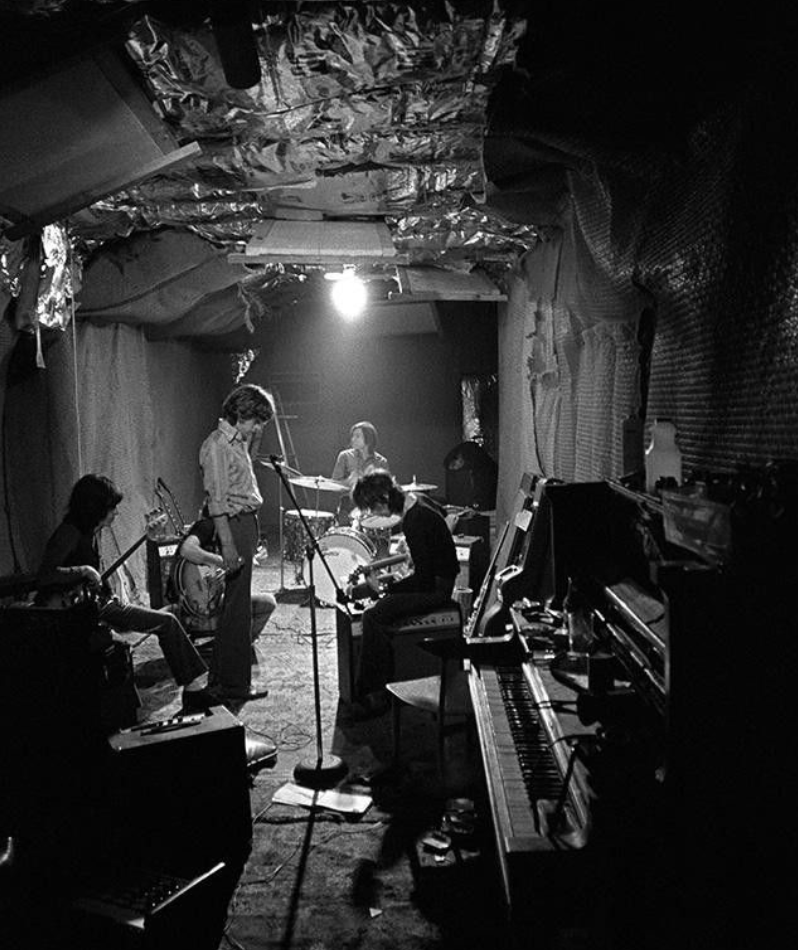
I don't think there needs to be a single answer to what music funding is for. Some programmes should address historic inequalities, while others might concentrate on financial need, regional development, artistic experimentation, international opportunities or helping musicians establish sustainable careers. A healthy funding landscape probably needs all of them. What concerns me is the possibility that, in trying to construct fair systems, we sometimes lose sight of the individual circumstances of the people applying. The four teenagers starting a band in Greater Manchester may have very little in common with the musicians who made their city famous. They may have no money, no connections and no idea how to navigate the industry. Equally, another young musician may face those same financial obstacles alongside racism, disability-related barriers or other forms of discrimination. A sophisticated approach to funding should be capable of recognising both situations without pretending they're identical.
It should also recognise that professional potential isn't always immediately visible. Some musicians develop slowly, some make work that doesn't fit neatly into established categories and others simply haven't had the opportunities that allow their abilities to become apparent. Perhaps we should also pay more attention to the people who never apply at all. They may assume funding isn't intended for them, may not know where to look, may be intimidated by the process or lack the confidence to describe their ambitions in the required language. Those musicians won't appear in statistics about unsuccessful applicants because they never got as far as completing the form.
After more than thirty years working in music, I'm increasingly convinced that talent is distributed far more widely than opportunity. The challenge is to build a funding landscape that recognises the many different reasons why talented people struggle to progress, without assuming that any one characteristic tells us everything about their circumstances. Class needs to be part of that conversation, alongside race, gender, disability, geography and other forms of disadvantage. Not in competition with them, but as part of a fuller understanding of how opportunity works.
Because somewhere in Greater Manchester, four teenagers are probably sitting in a rehearsal room right now, making an absolutely terrible racket that might eventually turn into something wonderful. It would be a shame if their future depended less on what they could create than on whether they knew how to fill in the right form.